Your Account Health Dashboard Isn’t Telling You the Full Story
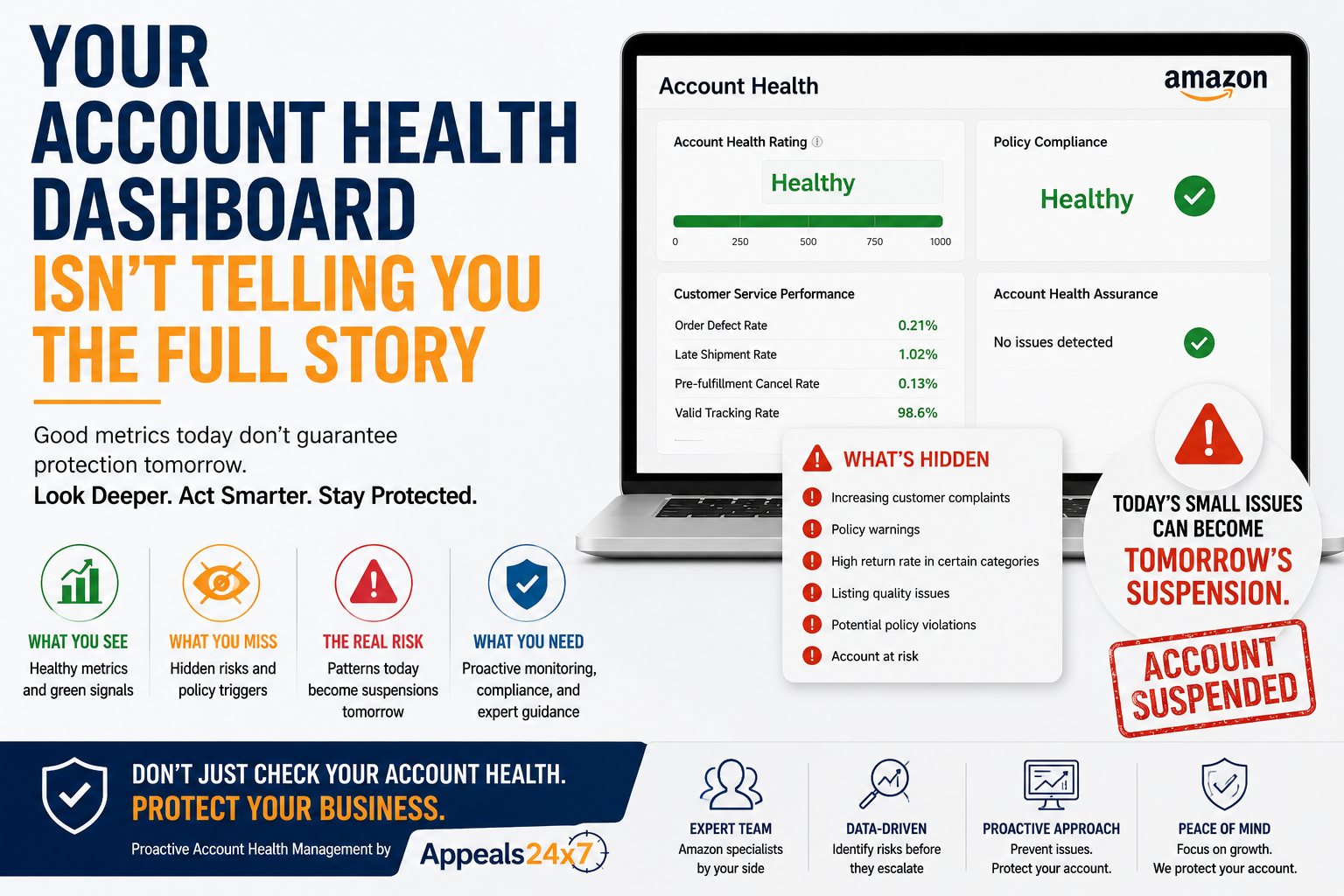
Many Amazon sellers feel safe when they see green metrics inside their Amazon Account Health Dashboard.
Healthy account.
No major warnings.
No immediate restrictions.
Everything looks fine.
But here’s the reality most sellers don’t realize:
A healthy-looking dashboard does not always mean a low-risk account.
And that misunderstanding is one of the biggest reasons sellers get caught off guard by account suspensions.
What Most Sellers Misunderstand About Amazon Account Health
The Amazon Account Health Dashboard is designed to show performance metrics and policy status.
But it does not always reveal:
- Emerging risk patterns
- Long-term compliance concerns
- Operational weaknesses
- Hidden policy triggers
In other words:
- The dashboard shows symptoms.
- Amazon evaluates systems.
That difference matters more than most sellers realize.
Why “Healthy” Metrics Can Be Misleading
Many sellers assume that if their metrics are green, their account is protected.
But Amazon’s evaluation goes deeper than visible scores.
An account may still face elevated risk due to:
- Increasing customer complaints
- Recurring listing inconsistencies
- Supplier-related authenticity concerns
- High return rates in specific product categories
- Repeated minor policy violations
Individually, these issues may appear small.
Together, they create a pattern.
And Amazon pays close attention to patterns.
Amazon Monitors More Than Your Dashboard Displays
This is where many U.S.-based sellers make a critical mistake.
They monitor:
- Order defect rate
- Late shipment rate
- Valid tracking rate
But overlook:
- Operational consistency
- Product compliance risks
- Listing accuracy
- Repeat warning signals
Amazon doesn’t just evaluate performance.
It evaluates trust.
And trust is built through consistent operational behavior over time.
The Hidden Risks Most Sellers Ignore
1. Repeated Minor Warnings
A single warning may not seem serious.
But repeated notifications signal:
- Lack of process control
- Recurring operational gaps
2. Customer Experience Patterns
Even with acceptable metrics, rising complaints in certain categories can increase scrutiny.
Amazon watches for:
- Negative trends
- Repeat buyer dissatisfaction
- Product-related patterns
3. Listing Quality Issues
Small listing inaccuracies can eventually trigger:
- Compliance reviews
- ASIN suppression
- Account-level concern
4. Reactive Management
Many sellers only react after receiving warnings.
By then, the risk has often already escalated.
What Smart Sellers Do Differently
Experienced sellers treat account health proactively – not reactively.
They:
- Monitor trends, not just scores
- Audit listings regularly
- Review supplier documentation consistently
- Build preventive systems before issues appear
The goal isn’t simply avoiding suspension.
It’s building long-term account stability.
Why Prevention Is More Valuable Than Reinstatement
Most sellers focus on appeals after suspension.
But preventing suspension is:
- Faster
- Safer
- Less expensive
- Less disruptive to revenue
At Appeals24x7, we’ve seen that the strongest Amazon businesses are not the ones that recover fastest.
They’re the ones who identify risk before Amazon escalates it.
What We’ve Seen at Appeals24x7
Across multiple account health cases, one pattern is clear:
Sellers rarely notice risk when it first appears.
They notice it:
- After repeated warnings
- After performance drops
- After account restrictions begin
By then, recovery becomes harder.
This is why proactive Amazon account health management matters far more than most sellers think.
Related Insight
Many sellers underestimate the impact of early warning signals on long-term account stability. Understanding the hidden cost of ignoring Amazon account health can help prevent serious issues before they escalate.
Final Thought
Your Account Health Dashboard is important.
But it should never be your only source of confidence.
Because the biggest risks are often:
- Gradual
- Operational
- Hidden beneath “healthy” metrics
Smart sellers don’t just monitor account health.
They monitor the systems behind it.
Leave A Comment