Understanding Amazon-Related Account Issues: Risks and Prevention Strategies
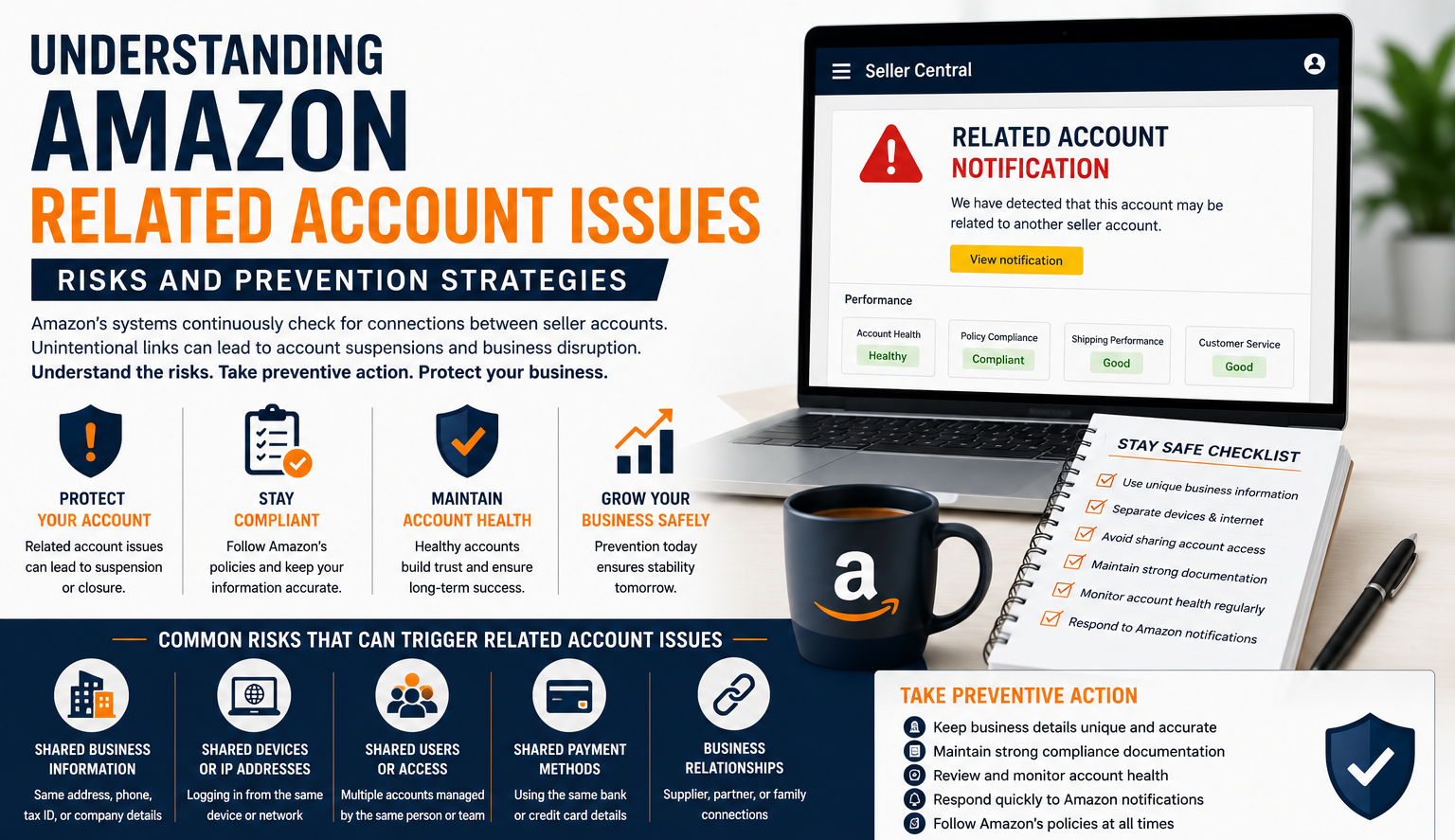
Amazon-related account issues are among the most serious compliance challenges an Amazon seller can face. Unlike listing violations or product-specific problems, related account investigations can affect your entire selling account and may result in account suspension if Amazon believes multiple accounts are connected in a way that violates its policies.
Many USA-based sellers are surprised to receive a related account notification because they were unaware that shared information, business relationships, or technical connections could trigger Amazon’s review systems.
Understanding how Amazon identifies related accounts and implementing preventive measures can significantly reduce your risk and help protect your business in the long term.
In this guide, we’ll explain what related account issues are, why they occur, and the best practices every USA Amazon seller should follow to maintain compliance.
What Are Amazon-Related Account Issues?
Amazon-related account issues occur when Amazon’s systems identify a connection between two or more seller accounts.
Having multiple accounts is not always a policy violation. Amazon allows multiple seller accounts under certain circumstances when sellers have legitimate business reasons and appropriate approval.
However, problems arise when Amazon believes accounts are linked in ways that violate its Selling Policies, or when one related account is subject to enforcement actions that may affect another.
A related account review may result in:
- Account suspension
- Additional verification requests
- Account restrictions
- Delayed account approval
- Compliance investigations
Understanding these risks is essential for every seller operating in the USA marketplace.
How Amazon Identifies Related Accounts
Amazon uses sophisticated systems to evaluate connections between seller accounts.
Although Amazon does not publicly disclose all the factors it considers, several common elements may contribute to a review of a related account.
Shared Business Information
Accounts using the same:
- Business address
- Company information
- Tax details
- Banking information
- Credit card information
May receive additional scrutiny.
Always ensure your business records are accurate and consistent.
Shared Devices and Internet Connections
Logging into multiple seller accounts from the same device or internet connection may create associations between accounts.
This is particularly important for:
- Shared office environments
- Virtual assistants
- Agencies
- Family businesses
Every seller should carefully manage account access to reduce unnecessary risk.
Shared User Access
Providing account access to multiple individuals without proper controls may unintentionally connect seller accounts.
Maintain clear user permissions and regularly review account access.
Business Relationships
Manufacturers, distributors, partners, or service providers who manage multiple Amazon accounts should maintain clear operational separation whenever possible.
Strong documentation demonstrating legitimate business relationships can be valuable during Amazon reviews.
Common Reasons Sellers Receive Related Account Notifications
Many related account investigations stem from operational practices rather than intentional policy violations.
Common situations include:
- Using previously suspended business information
- Sharing banking details across businesses
- Reusing devices between seller accounts
- Hiring agencies managing multiple accounts
- Purchasing existing Amazon businesses
- Family members operating separate accounts
In many cases, sellers are unaware that these activities can trigger Amazon’s review systems.
How Related Account Issues Affect Your Business
Related account investigations can extend beyond a single listing or product.
Potential consequences include:
Account Suspension
Amazon may suspend an account while investigating potential policy violations.
Understanding the Amazon account reinstatement process for USA sellers becomes especially important if an enforcement action occurs.
Increased Compliance Reviews
Accounts identified for related account concerns often experience additional verification requests.
Maintaining organized business records makes responding much easier.
Preparing for Amazon seller verification and document reviews before Amazon requests documentation can significantly reduce delays.
Declining Account Health
Repeated compliance concerns may influence your overall Account Health Rating.
Monitoring your Amazon Account Health Rating regularly helps identify issues before they become larger enforcement actions.
Best Practices to Prevent Related Account Issues
Preventing related account issues begins with maintaining clear operational separation and following Amazon’s policies consistently.
Keep Business Information Accurate
Ensure your:
- Business registration
- Banking details
- Contact information
- Tax records
Remain accurate and up to date within Seller Central.
Control Account Access
Provide account access only to trusted individuals.
Review user permissions regularly and remove inactive users.
This reduces unnecessary account connections.
Maintain Strong Documentation
Organized records demonstrate business legitimacy during Amazon reviews.
Maintain copies of:
- Business registration documents
- Supplier invoices
- Utility bills
- Bank statements
- Authorization letters
Keeping complete Amazon compliance documentation helps sellers respond more confidently when verification requests arise.
Monitor Performance Notifications
Performance Notifications often provide early warning signs before enforcement actions escalate.
Responding promptly to Amazon’s concerns demonstrates operational responsibility and reduces long-term risk.
Understanding Amazon Performance Notifications can help sellers identify compliance issues before they affect account status.
Protect Overall Account Health
Strong operational practices reduce many compliance risks.
Successful sellers regularly:
- Audit listings
- Monitor customer feedback
- Review policy updates
- Verify documentation
- Track Amazon Account Health metrics
Preventive management is always more effective than reactive recovery.
What To Do If Amazon Flags a Related Account
If Amazon identifies your account as related to another seller account:
Review the Notification Carefully
Read Amazon’s message completely before taking action.
Understand exactly what information Amazon is requesting.
Gather Supporting Documentation
Prepare documentation that demonstrates:
- Business ownership
- Operational independence
- Legitimate business activities
- Accurate account information
Clear documentation strengthens your response.
Investigate Internal Processes
Review:
- User access
- Device usage
- Shared business information
- Service provider access
Identifying potential connections helps address Amazon’s concerns more effectively.
Develop a Structured Response
Your response should clearly explain:
- The circumstances
- Supporting evidence
- Corrective actions
- Preventive measures
Avoid speculation or emotional explanations.
Focus on facts supported by documentation.
How Appeals24x7 Helps USA Amazon Sellers
Related account investigations often involve complex compliance issues that require careful documentation and strategic responses.
At Appeals24x7, we help USA-based Amazon sellers evaluate related account notifications, organize supporting evidence, identify operational risks, and prepare structured responses that align with Amazon’s compliance expectations.
Whether you’re addressing verification requests or working toward account recovery, proactive compliance remains the strongest long-term strategy.
Final Thoughts
Amazon-related account issues can have significant consequences for sellers who are unprepared.
Fortunately, most risks can be reduced through accurate documentation, careful account management, and a proactive approach to compliance.
For USA sellers, protecting your Amazon account means more than following listing policies.
It requires maintaining operational transparency, monitoring account health, and understanding how Amazon evaluates relationships between seller accounts.
By implementing strong preventive practices today, you can reduce future enforcement risks and build a more stable, compliant Amazon business for years to come.
Leave A Comment