Amazon Compliance Audit Checklist: Best Practices for Growing Brands
As your Amazon business grows, so does the importance of maintaining strong compliance standards. An effective Amazon compliance audit checklist helps USA sellers identify operational risks before they become policy violations, listing removals, or account suspensions.
Many sellers only review their compliance processes after receiving a Performance Notification. By that point, Amazon has already identified potential issues. The most successful brands take the opposite approach. They perform regular compliance audits to ensure every part of their business aligns with Amazon’s policies and customer expectations.
Whether you’re managing a growing private label brand or an established eCommerce business, routine compliance audits can protect your seller account, improve operational efficiency, and support sustainable growth.
What Is an Amazon Compliance Audit?
An Amazon compliance audit is a systematic review of your seller account, listings, operational processes, and documentation to ensure everything complies with Amazon’s marketplace requirements.
Rather than waiting for Amazon to identify issues, sellers conduct internal reviews to detect risks early and address them before enforcement actions are taken.
A comprehensive audit typically covers:
- Product listings
- Account health
- Documentation
- Inventory management
- Customer service performance
- Shipping operations
- Product compliance
- Seller account settings
Routine audits help reduce unnecessary risks while improving long-term marketplace stability.
Why Compliance Audits Matter for Growing Brands
As your catalog expands, managing compliance becomes increasingly complex.
New products, suppliers, team members, and operational processes all introduce additional risks.
Conducting regular compliance audits helps you:
- Prevent listing suspensions
- Maintain strong Account Health
- Improve customer trust
- Reduce operational errors
- Prepare for Amazon verification requests
- Support long-term business growth
For USA sellers, proactive compliance is one of the most effective ways to protect valuable selling privileges.
Amazon Compliance Audit Checklist
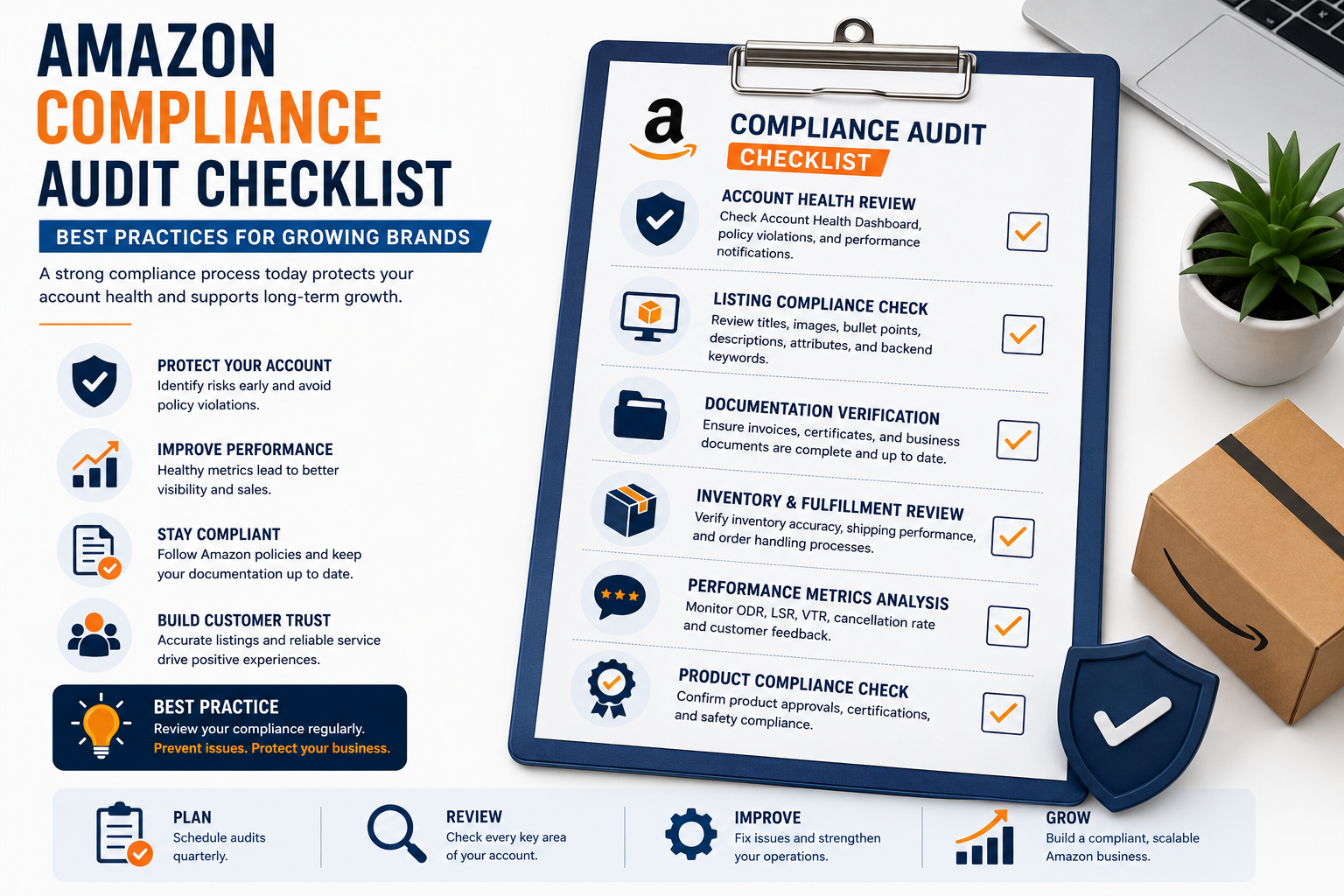
Below are the key areas every seller should review regularly.
Review Account Health
Start by evaluating your Amazon Account Health Dashboard.
Pay close attention to:
- Policy violations
- Performance Notifications
- Active warnings
- Product compliance issues
- Customer complaints
Regularly monitoring your Amazon Account Health Rating allows you to resolve concerns before they become account-level problems.
Audit Product Listings
Every listing should accurately represent the product being sold.
Review:
- Product titles
- Images
- Bullet points
- Product descriptions
- Backend keywords
- Product attributes
Following Amazon product detail page compliance best practices helps ensure your listings remain accurate, customer-friendly, and policy-compliant.
Verify Compliance Documentation
Maintain organized records for every product you sell.
Essential documentation includes:
- Supplier invoices
- Business registration documents
- Product compliance certificates
- Authorization letters
- Bank statements
- Utility bills
Keeping complete Amazon compliance documentation allows you to respond quickly if Amazon requests verification.
Review Supplier Records
Your suppliers play an important role in Amazon compliance.
Confirm that you have:
- Current supplier invoices
- Updated contact information
- Purchase records
- Authenticity documentation
Accurate supplier documentation supports both verification and authenticity reviews.
Evaluate Inventory Accuracy
Inventory discrepancies often lead to customer dissatisfaction.
Review:
- Inventory counts
- Fulfillment processes
- Restocking procedures
- Warehouse accuracy
Accurate inventory management reduces cancellations and late shipments.
Analyze Seller Performance Metrics
Strong operational performance supports long-term account health.
Review key metrics including:
- Order Defect Rate
- Late Shipment Rate
- Valid Tracking Rate
- Pre-Fulfillment Cancellation Rate
Monitoring your Amazon seller performance metrics helps identify operational weaknesses before they affect account health.
Inspect Customer Experience
Customer feedback provides valuable insight into compliance risks.
Review:
- Product reviews
- Negative feedback
- Return reasons
- Customer messages
Recurring issues often reveal listing inaccuracies or operational problems that require attention.
Confirm Product Compliance
Certain products sold in the USA require additional regulatory documentation.
Review whether your products require:
- Safety testing
- Certification documents
- Product labeling
- Regulatory approvals
Keeping compliance records up to date reduces listing interruptions.
Common Compliance Gaps Sellers Overlook
Many compliance issues develop because sellers focus only on sales performance.
Frequently overlooked areas include:
- Outdated supplier invoices
- Expired compliance certificates
- Incorrect listing images
- Missing product attributes
- Weak documentation systems
- Unresolved Performance Notifications
- Inconsistent product descriptions
Identifying these issues during an audit is far easier than addressing them after Amazon initiates enforcement.
Best Practices for Conducting Regular Audits
Successful USA sellers make compliance audits part of their routine business operations.
Recommended practices include:
Schedule Quarterly Audits
Review your account every three months or whenever significant operational changes occur.
Routine audits reduce long-term risk.
Maintain Digital Records
Store documentation securely using organized digital folders.
Quick access to records improves response times during Amazon reviews.
Stay Updated on Amazon Policies
Amazon policies continue to evolve.
Review policy updates regularly to ensure your business remains compliant.
Understanding Amazon Performance Notifications can also help you recognize early warning signs before they impact your account.
Train Your Team
If multiple people manage your Amazon account, establish standardized compliance procedures.
Consistent internal processes reduce operational mistakes.
When to Seek Professional Support
Some compliance issues involve multiple operational areas or complex documentation requirements.
Professional guidance may be beneficial if you experience:
- Repeated policy violations
- ASIN deactivations
- Product authenticity complaints
- Verification requests
- Declining Account Health
- Listing suppression
If compliance concerns eventually affect your selling privileges, understanding the Amazon account reinstatement process for USA sellers can help you recover more effectively.
How Appeals24x7 Helps USA Amazon Sellers
At Appeals24x7, we help USA-based Amazon sellers build proactive compliance systems that reduce operational risk and strengthen long-term account stability.
From compliance audits and documentation reviews to Amazon account health management and reinstatement support, our team works with sellers to identify potential issues before they become costly business disruptions.
Our goal is not simply to resolve problems but to help businesses prevent them.
Final Thoughts
An Amazon compliance audit checklist is one of the most valuable tools growing brands can use to protect their business.
Regular audits improve operational consistency, strengthen compliance, reduce account risks, and support long-term marketplace success.
For USA sellers, compliance should never be viewed as a one-time project.
It should become an ongoing business strategy that evolves alongside your brand.
By reviewing your account regularly, maintaining accurate documentation, monitoring seller performance, and staying informed about Amazon’s policies, you build a stronger, more resilient business that is prepared for long-term growth and marketplace success.
Leave A Comment