Amazon Seller Performance Metrics: What They Mean for Your Account Health
Amazon seller performance metrics are among the most important indicators Amazon uses to evaluate the reliability of every seller on its marketplace. While sales growth, advertising performance, and product rankings are essential for business success, Amazon places equal importance on operational performance and customer satisfaction.
For USA sellers, maintaining healthy performance metrics is critical to protecting account health, avoiding policy enforcement, and preserving selling privileges. Even small declines in key metrics can trigger Performance Notifications, reduce customer trust, and increase the likelihood of listing restrictions or account reviews.
This guide explains the most important Amazon seller performance metrics, why they matter, and the practical steps you can take to maintain a healthy seller account.
What Are Amazon Seller Performance Metrics?
Amazon seller performance metrics are measurable standards that evaluate how well a seller meets Amazon’s customer service and operational expectations.
These metrics help Amazon determine whether sellers consistently deliver a positive buying experience.
Performance metrics influence:
- Amazon Account Health Rating
- Customer trust
- Marketplace compliance
- Listing visibility
- Selling privileges
Monitoring these metrics regularly allows sellers to identify potential issues before they become serious compliance concerns.
Why Performance Metrics Matter
Amazon’s success depends on customer confidence.
To maintain that trust, Amazon continuously evaluates seller performance using operational data collected from every order.
Strong performance metrics help sellers:
- Maintain account health
- Reduce policy violations
- Improve customer satisfaction
- Lower suspension risk
- Build long-term marketplace credibility
For USA sellers, consistent operational excellence is one of the strongest defenses against account enforcement actions.
Key Amazon Seller Performance Metrics
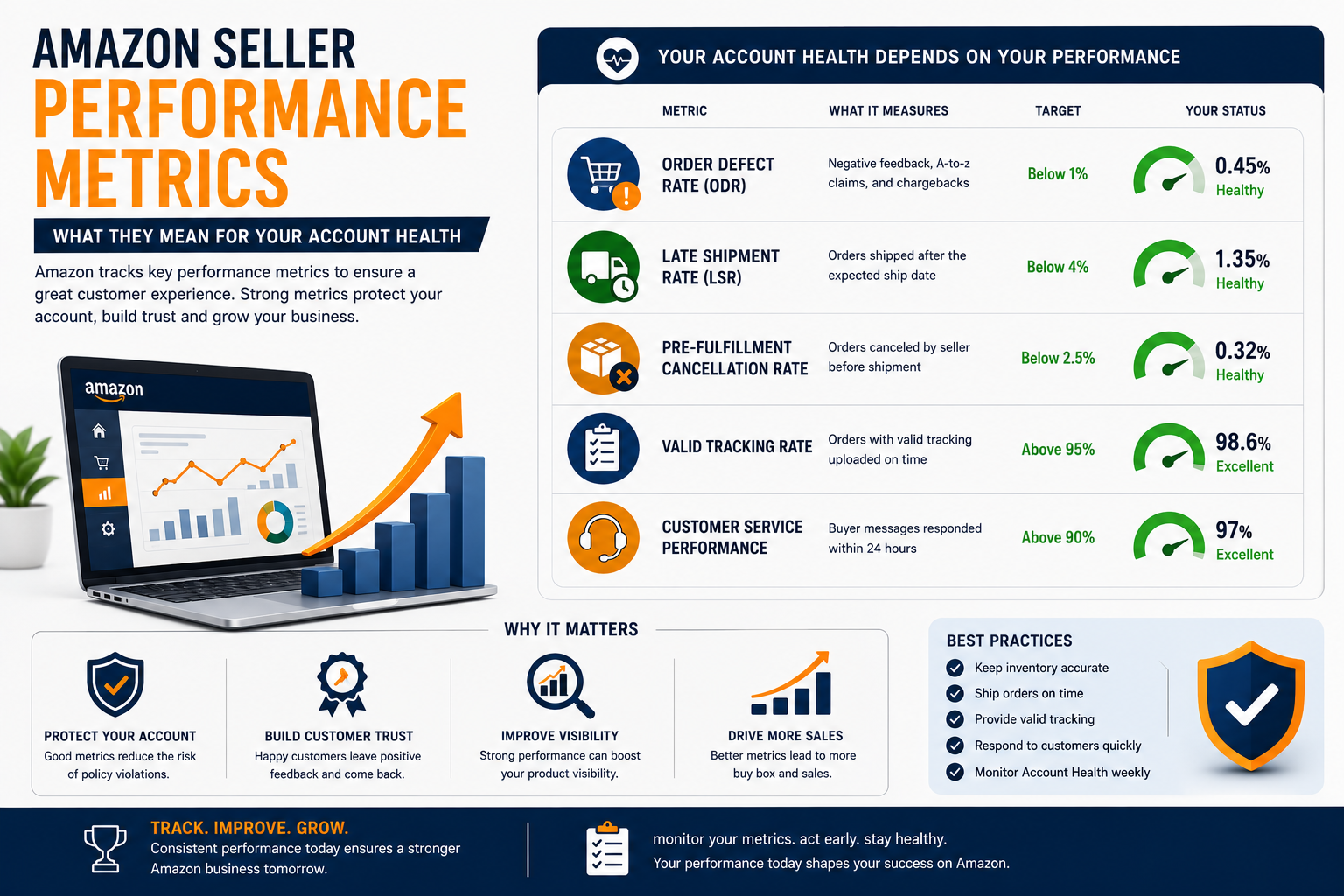
Order Defect Rate (ODR)
The Order Defect Rate (ODR) measures orders that result in negative customer experiences.
This metric includes:
- Negative feedback
- A-to-z Guarantee claims
- Credit card chargebacks
A high Order Defect Rate signals potential customer satisfaction issues and may negatively affect your account health.
Reducing customer complaints through accurate listings and reliable fulfillment helps maintain a healthy ODR.
Late Shipment Rate (LSR)
The Late Shipment Rate tracks orders confirmed after Amazon’s expected shipment deadline.
Frequent late shipments may indicate operational inefficiencies.
Best practices include:
- Maintaining accurate inventory
- Processing orders promptly
- Using reliable shipping partners
- Monitoring fulfillment performance daily
Timely shipping strengthens customer trust while supporting healthy seller metrics.
Pre-Fulfillment Cancellation Rate
This metric measures how often sellers cancel customer orders before shipment.
High cancellation rates may occur because of:
- Inventory inaccuracies
- Pricing errors
- Supply chain disruptions
Maintaining real-time inventory management significantly reduces the risk of cancellations.
Valid Tracking Rate (VTR)
Amazon expects sellers to provide accurate shipment tracking information.
A strong Valid Tracking Rate helps:
- Improve customer confidence
- Reduce buyer inquiries
- Support delivery transparency
Reliable tracking also contributes to better overall account performance.
Customer Service Performance
Amazon evaluates how effectively sellers respond to customer inquiries and resolve issues.
Professional communication and timely responses often reduce negative feedback while improving customer satisfaction.
How Performance Metrics Affect Account Health
Performance metrics directly influence your Amazon Account Health Rating.
Repeated performance issues may result in:
- Performance Notifications
- Listing suppression
- ASIN deactivation
- Increased account reviews
- Amazon Account suspension
Regularly monitoring your Amazon Account Health Rating allows you to identify warning signs before they escalate into enforcement actions.
Healthy metrics are one of the strongest indicators of a well-managed Amazon business.
Common Mistakes That Hurt Seller Performance
Many seller performance issues develop gradually through small operational mistakes.
Common examples include:
Poor Inventory Management
Overselling products often results in cancellations and delayed shipments.
Accurate inventory forecasting reduces these risks.
Inaccurate Product Listings
Misleading product descriptions frequently lead to:
- Customer complaints
- Returns
- Negative reviews
Following Amazon listing quality guidelines helps improve customer expectations while reducing performance issues.
Weak Compliance Processes
Incomplete documentation may delay Amazon reviews and create unnecessary compliance concerns.
Maintaining organized Amazon compliance documentation allows sellers to respond more efficiently when Amazon requests verification.
Ignoring Performance Notifications
Performance Notifications often provide early warning signs before more serious enforcement occurs.
Understanding Amazon Performance Notifications enables sellers to resolve problems proactively rather than reactively.
Best Practices to Maintain Healthy Performance Metrics
Successful USA sellers treat performance monitoring as an ongoing business process.
Recommended practices include:
Monitor Account Health Weekly
Review your Account Health Dashboard regularly.
Track changes in:
- Order Defect Rate
- Late Shipment Rate
- Customer feedback
- Policy compliance
- Performance Notifications
Early detection helps prevent larger problems.
Audit Product Listings
Regular listing reviews improve:
- Product accuracy
- Customer satisfaction
- Conversion rates
- Compliance
Maintaining strong Amazon product detail page compliance also reduces customer confusion and policy risks.
Strengthen Operational Processes
Focus on improving:
- Inventory accuracy
- Order processing
- Shipping performance
- Customer communication
Operational consistency supports long-term account stability.
Prepare Documentation Before It’s Needed
Organized supplier invoices, business records, and verification documents reduce response times during Amazon reviews.
Reviewing your Amazon seller verification process before Amazon requests documentation helps prevent unnecessary delays.
What To Do If Your Metrics Decline
If performance metrics begin to worsen:
- Identify the root cause immediately.
- Review recent customer complaints.
- Analyze fulfillment performance.
- Correct operational weaknesses.
- Monitor improvements over time.
Avoid waiting until Amazon issues enforcement actions.
Proactive improvements are almost always more effective than reactive recovery.
If declining performance eventually affects your selling privileges, understanding the Amazon account reinstatement process for USA sellers can help you prepare a stronger recovery strategy.
How Appeals24x7 Helps USA Amazon Sellers
At Appeals24x7, we help USA-based Amazon sellers strengthen operational performance, improve compliance, and protect long-term account health.
Whether you’re responding to Performance Notifications, improving seller metrics, recovering suspended listings, or preparing documentation for Amazon reviews, our strategic approach helps reduce risk while supporting sustainable marketplace growth.
Final Thoughts
Amazon seller performance metrics are much more than operational statistics.
They represent Amazon’s overall assessment of how consistently your business delivers a positive customer experience.
For USA sellers, maintaining healthy performance metrics requires continuous monitoring, accurate listings, reliable fulfillment, and proactive compliance management.
The most successful Amazon businesses do not wait for poor metrics to trigger enforcement actions.
They build operational systems that prevent problems before they occur, protecting both their account health and long-term business success.
Leave A Comment