
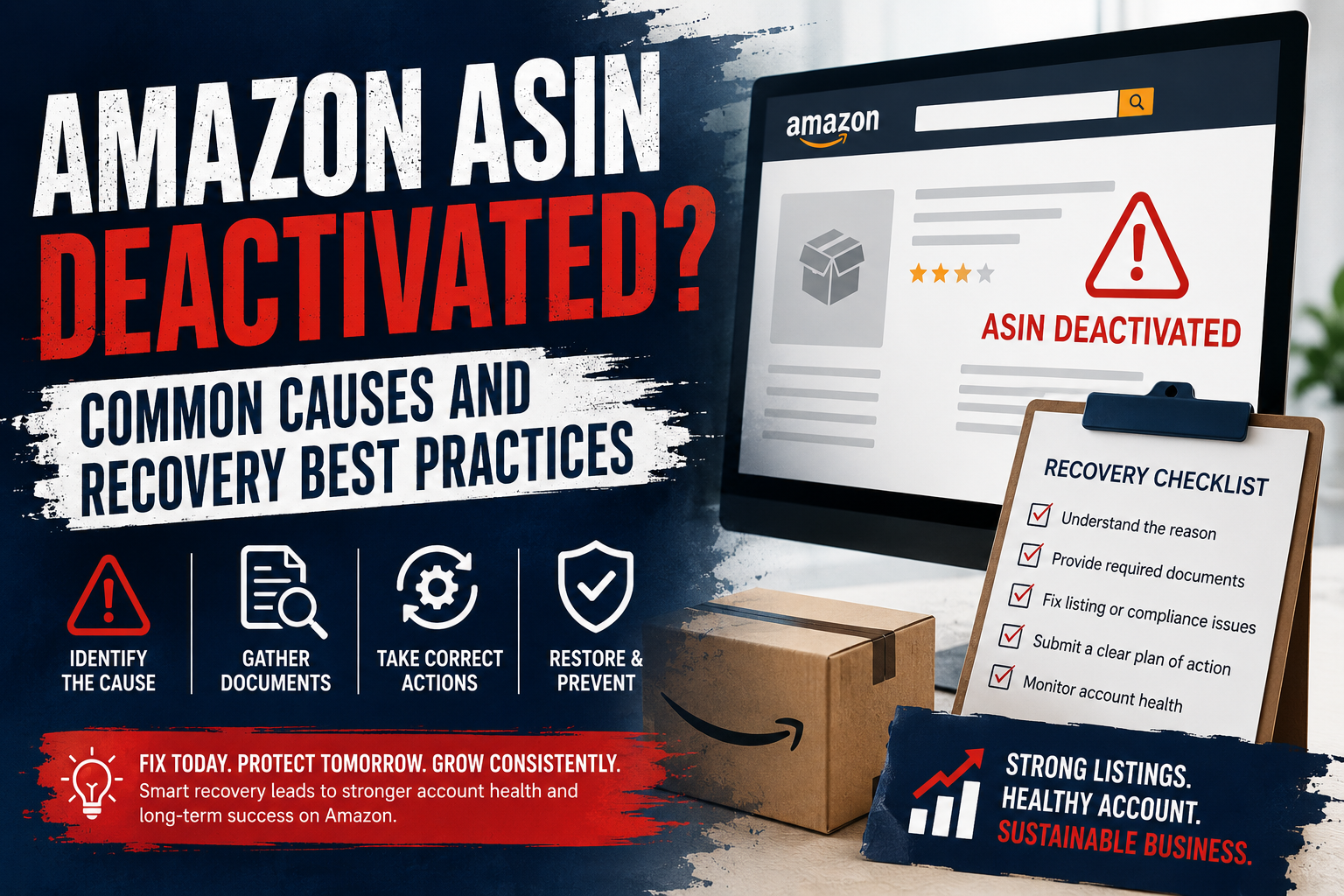
Amazon ASIN Deactivated? Common Causes and Recovery Best Practices
A notification that an Amazon ASIN has been deactivated can be frustrating for any seller. One moment, your product is generating sales; the next, it disappears from Amazon’s marketplace. For sellers in the USA, a deactivated ASIN can result in lost revenue, reduced visibility, and a decline in customer trust if the issue is not resolved quickly.
The good news is that many ASIN deactivations are preventable. Understanding why Amazon removes product listings and following proven recovery practices can help you restore your listing while reducing the risk of future disruptions.
In this guide, we’ll explain the most common reasons an Amazon ASIN is deactivated, how Amazon reviews affect listings, and the best practices USA sellers should follow to recover successfully.
What Does an Amazon ASIN Deactivated Notice Mean?
When Amazon deactivates an ASIN, it means the product listing has been removed from active search results or can no longer be sold until specific issues are resolved.
Unlike an account suspension, an ASIN deactivation affects an individual product rather than your entire seller account. However, repeated listing issues can contribute to lower account health and increase the likelihood of broader enforcement actions.
Amazon may deactivate an ASIN for several reasons, including:
- Product authenticity concerns
- Intellectual property complaints
- Product compliance issues
- Listing policy violations
- Safety concerns
- Missing documentation
Each deactivation has a specific reason, so understanding Amazon’s notification is the first step toward recovery.
Common Causes of Amazon ASIN Deactivation
Product Authenticity Complaints
One of the leading causes of ASIN deactivation is an authenticity complaint.
Even if your products are genuine, Amazon may request invoices or supplier documentation to verify authenticity. If sellers cannot provide acceptable records, the listing may remain inactive until Amazon completes its review.
Maintaining organized supplier invoices and purchase records can significantly reduce this risk.
Amazon Product Authenticity Complaints: How Sellers Can Prevent Account Risk
Intellectual Property Complaints
Amazon takes trademark, copyright, and patent complaints seriously.
Listings may be deactivated if a rights owner reports unauthorized use of:
- Product images
- Brand names
- Logos
- Marketing content
Selling branded products without proper authorization may also trigger enforcement.
Product Compliance Requirements
Certain products sold in the USA must meet federal or state compliance standards.
Amazon may request:
- Safety certificates
- Laboratory testing reports
- Compliance documentation
- Product certifications
Failure to provide these documents within the requested timeframe can result in ASIN deactivation.
Listing Content Violations
Sometimes the product itself is not the issue.
Instead, Amazon identifies problems with the listing, such as:
- Misleading claims
- Keyword stuffing
- Incorrect product attributes
- Inaccurate images
- Prohibited language
Accurate listings improve both customer experience and marketplace compliance.
Poor Product Performance
A pattern of negative customer experiences can also increase listing risk.
Examples include:
- High return rates
- Frequent negative reviews
- Safety complaints
- Incorrect product descriptions
Amazon continuously monitors customer feedback to protect buyers and improve marketplace quality.
How Amazon Evaluates Deactivated ASINs
Amazon’s review process focuses on protecting customers.
When reviewing a deactivated ASIN, Amazon typically evaluates:
- Product authenticity
- Documentation quality
- Supplier legitimacy
- Listing accuracy
- Customer feedback
- Compliance with marketplace policies
Simply stating that your product is authentic is rarely enough.
Amazon expects supporting evidence to verify your sourcing and demonstrate compliance.
Recovery Best Practices for USA Sellers
Recovering a deactivated listing requires a structured approach rather than a rushed response.
Understand the Root Cause
Carefully review the Performance Notification in Seller Central.
Identify whether the issue relates to:
- Authenticity
- Product compliance
- Intellectual property
- Listing quality
- Product safety
Avoid guessing the reason.
Understanding the exact issue helps you prepare a stronger response.
Gather Complete Documentation
Depending on the reason for deactivation, Amazon may request:
- Commercial invoices
- Supplier information
- Compliance certificates
- Product testing reports
- Authorization letters
Ensure every document is complete, clear, and easy to read.
Amazon Seller Verification: How to Prepare Your Documents for a Smooth Review
Correct the Underlying Issue
Recovery is about more than providing documentation.
If the listing contains inaccurate information, update it.
If compliance documents are missing, obtain them before responding.
Amazon wants to see that the issue has already been resolved.
Submit a Clear Response
Your response should explain:
- The root cause
- Corrective actions taken
- Preventive measures implemented
Keep your explanation factual, concise, and solution-oriented.
How to Prevent Future ASIN Deactivations
Successful sellers focus on prevention rather than repeated recovery.
Best practices include:
- Regularly audit product listings
- Keep supplier documentation organized
- Verify compliance before listing products
- Monitor customer feedback
- Review Account Health frequently
- Stay updated on Amazon policy changes
Consistent compliance reduces long-term business risk.
Why Account Health Matters
An isolated listing issue may seem manageable, but repeated ASIN deactivations can impact your overall Amazon Account Health.
Monitoring performance metrics helps sellers identify potential risks before they become account-level problems.
Maintaining strong account health improves seller credibility and reduces the likelihood of future enforcement actions.
Amazon Account Health Rating Compliance Guide
The Hidden Cost of Ignoring Amazon Account Health
How Appeals24x7 Helps USA Amazon Sellers
Recovering a deactivated ASIN can be challenging when multiple policy concerns or documentation issues are involved.
At Appeals24x7, we help USA-based Amazon sellers evaluate deactivation notices, organize supporting documentation, and develop structured recovery strategies that align with Amazon’s expectations.
Whether the issue involves authenticity complaints, compliance documentation, or listing policy violations, our goal is to help sellers resolve problems efficiently while strengthening long-term account stability.
Final Thoughts
An Amazon ASIN deactivated notification does not necessarily mean the end of a product’s success.
For many USA sellers, it serves as an opportunity to strengthen compliance processes, improve documentation, and build a more resilient Amazon business.
The most successful sellers do not simply react when Amazon removes a listing.
They invest in preventive systems, maintain accurate records, and continuously monitor their account health.
By taking a proactive approach, you can reduce listing disruptions, protect your revenue, and build long-term success on Amazon.
Leave A Comment