
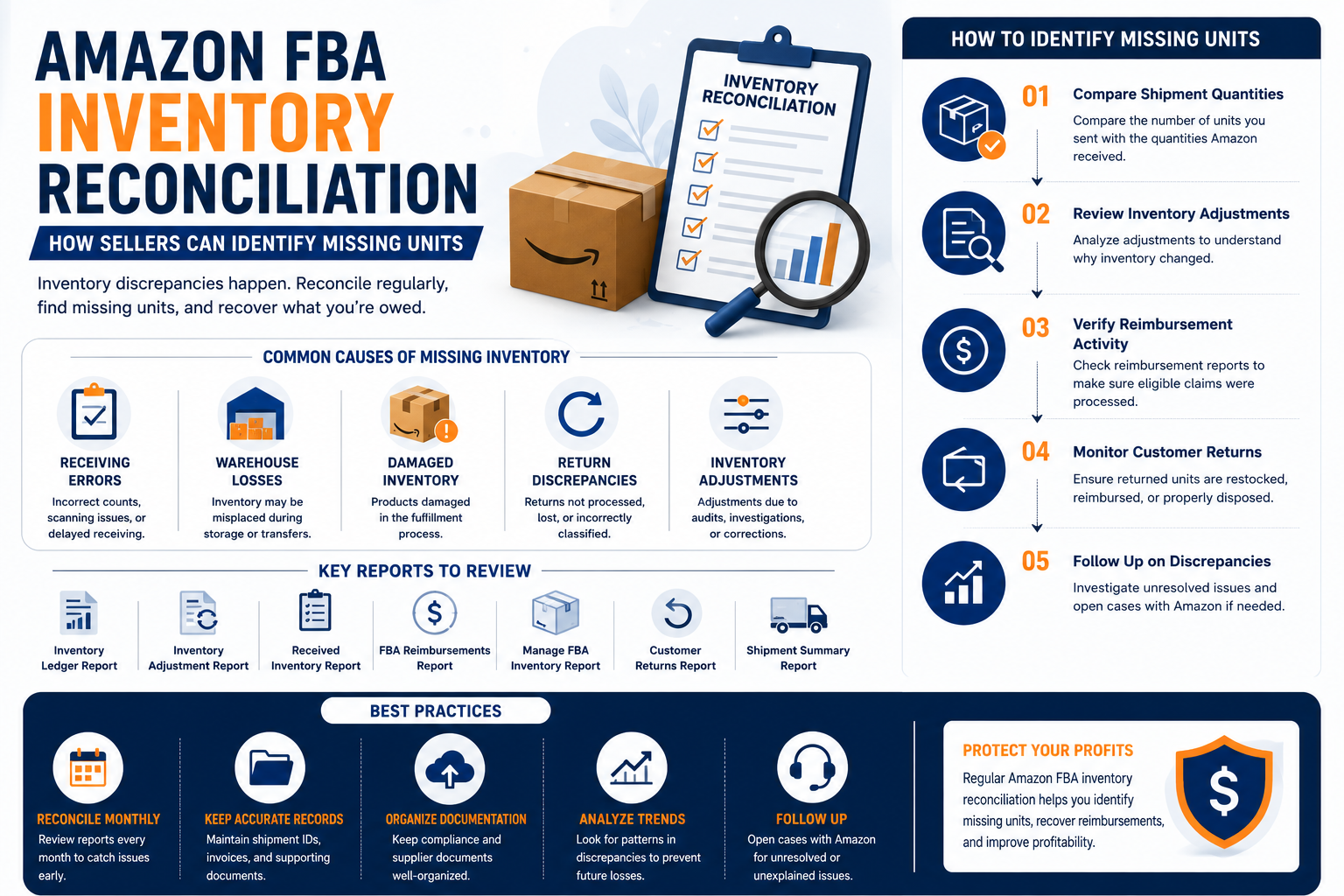
Amazon FBA Inventory Reconciliation: How Sellers Can Identify Missing Units
Managing inventory through Fulfillment by Amazon (FBA) offers convenience and scalability, but it also requires careful oversight. Even though Amazon operates one of the world’s largest fulfillment networks, inventory discrepancies can occur during receiving, storage, fulfillment, warehouse transfers, or customer returns. This is why Amazon FBA inventory reconciliation is an essential process for every USA-based Amazon seller.
Many sellers assume Amazon automatically detects every missing unit and issues reimbursement without intervention. While Amazon does reimburse eligible inventory losses, not every discrepancy is identified immediately. Sellers who regularly reconcile their inventory are far more likely to detect missing units, recover eligible reimbursements, and maintain accurate inventory records.
This guide explains how inventory reconciliation works, where discrepancies occur, and the best practices every growing Amazon business should follow.
What Is Amazon FBA Inventory Reconciliation?
Amazon FBA inventory reconciliation is the process of comparing your shipment records with Amazon’s inventory reports to ensure every unit has been properly received, stored, sold, transferred, returned, or reimbursed.
The objective is to identify inventory discrepancies before they result in permanent financial losses.
Typical reconciliation involves reviewing:
- Inventory received
- Inventory adjustments
- Warehouse transfers
- Customer returns
- Reimbursements
- Inventory removals
Routine reconciliation provides greater visibility into inventory movement while supporting better inventory management decisions.
Why Inventory Reconciliation Matters
Inventory represents one of the largest investments for many Amazon sellers.
When units disappear without being identified, sellers may experience:
- Lost revenue
- Incorrect inventory forecasting
- Stock shortages
- Missed sales opportunities
- Reduced profitability
Regular reconciliation helps ensure every product shipped to Amazon is properly accounted for.
For USA sellers managing hundreds or thousands of units, even small discrepancies can become significant over time.
Common Reasons Inventory Goes Missing
Inventory discrepancies can occur at various stages of Amazon’s fulfillment process.
Understanding these situations helps sellers investigate inventory more effectively.
Receiving Discrepancies
After inventory arrives at an Amazon fulfillment center, Amazon must verify shipment contents.
Occasionally, sellers may notice:
- Fewer units received
- Delayed receiving
- Shipment quantity differences
- Barcode scanning issues
Comparing shipment confirmations with receiving reports helps identify potential discrepancies early.
Warehouse Misplacement
Inventory occasionally becomes misplaced during warehouse operations.
Products may be:
- Temporarily unavailable
- Awaiting transfer
- Incorrectly assigned
- Misplaced within fulfillment centers
Many of these situations are eventually resolved, but regular monitoring remains important.
Damaged Inventory
Products may become damaged while being stored or handled inside Amazon’s fulfillment network.
Inventory adjustment reports often identify:
- Warehouse damage
- Disposal events
- Unsellable inventory
- Product destruction
Review these adjustments carefully to determine whether reimbursement may apply.
Customer Return Issues
Returned products do not always return to sellable inventory immediately.
Some units may be:
- Awaiting inspection
- Classified incorrectly
- Lost during processing
- Marked as damaged
Monitoring return reports helps ensure returned inventory is properly accounted for.
Inventory Adjustment Errors
Amazon periodically performs inventory audits and operational adjustments.
Review every adjustment carefully.
Unexpected inventory changes deserve additional investigation.
Reports Every Seller Should Monitor
Successful inventory reconciliation depends on reviewing multiple Amazon reports together.
The most valuable reports include:
- Inventory Ledger Report
- Inventory Adjustment Report
- Received Inventory Report
- FBA Reimbursements Report
- Manage FBA Inventory Report
- Customer Returns Report
- Shipment Summary Report
Comparing these reports provides a complete picture of inventory movement throughout Amazon’s fulfillment network.
How to Identify Missing Units
A structured review process improves both accuracy and efficiency.
Compare Shipment Records
Begin by comparing the number of units shipped with the quantity Amazon confirms as received.
Investigate discrepancies that remain unresolved after Amazon completes receiving.
Review Inventory Adjustments
Analyze inventory adjustments to understand why inventory changed.
Determine whether products were:
- Found
- Lost
- Damaged
- Reimbursed
- Transferred
Unexpected adjustments often reveal inventory issues that require further review.
Verify Reimbursement Activity
Amazon reimburses eligible inventory losses under specific circumstances.
However, sellers should verify reimbursement reports regularly to confirm eligible claims have been processed correctly.
Learning more about our Amazon FBA reimbursement services USA sellers can help maximize reimbursement opportunities while reducing overlooked claims.
Monitor Customer Returns
Customer returns should eventually be:
- Returned to inventory
- Reimbursed
- Disposed of appropriately
Unresolved return transactions deserve additional attention during every reconciliation cycle.
Best Practices for Inventory Reconciliation
Growing Amazon businesses treat reconciliation as an ongoing operational process.
Reconcile Inventory Every Month
Monthly reconciliation helps identify discrepancies before reimbursement deadlines expire.
Consistent reviews also improve inventory forecasting.
Maintain Accurate Shipment Records
Keep detailed records of:
- Shipment IDs
- Packing lists
- Carrier tracking
- Receiving confirmations
Accurate documentation supports faster investigations when discrepancies occur.
Organize Supporting Documentation
Store supplier invoices, shipment confirmations, and inventory records in a secure location.
Maintaining complete Amazon compliance documentation strengthens your ability to respond if Amazon requests additional information during reimbursement reviews.
Review Inventory Trends
Rather than investigating isolated incidents, monitor long-term inventory patterns.
Recurring discrepancies may reveal operational weaknesses that require attention.
Common Mistakes Sellers Make
Many inventory losses remain unresolved because sellers:
- Wait too long to review reports
- Ignore small discrepancies
- Fail to maintain shipment records
- Overlook customer return reports
- Assume every missing unit is automatically reimbursed
Building a consistent reconciliation process significantly reduces these risks.
How Inventory Accuracy Supports Account Health
Inventory management affects much more than reimbursement.
Accurate inventory contributes to:
- Better customer satisfaction
- Lower cancellation rates
- Improved fulfillment performance
- Stronger operational efficiency
Monitoring your Amazon seller performance metrics alongside inventory reconciliation helps create a more reliable fulfillment operation.
Likewise, maintaining a healthy Amazon Account Health Rating supports long-term marketplace stability by identifying operational concerns before they affect your seller account.
How Appeals24x7 Helps USA Amazon Sellers
At Appeals24x7, we help USA-based Amazon sellers recover eligible FBA reimbursements, investigate inventory discrepancies, and strengthen inventory management processes.
Our team works with sellers to identify missing inventory, review Amazon reports, organize supporting documentation, and maximize reimbursement opportunities while improving long-term operational performance.
By combining inventory reconciliation with proactive account management, sellers can reduce financial losses and focus on growing their Amazon business with confidence.
Final Thoughts
Amazon FBA inventory reconciliation is one of the most valuable financial controls available to Amazon sellers.
Regular reconciliation helps identify missing units, improve inventory accuracy, recover eligible reimbursements, and strengthen operational efficiency.
For USA sellers, waiting until inventory problems become obvious often means missed reimbursement opportunities and unnecessary revenue loss.
By consistently reviewing inventory reports, maintaining organized records, and monitoring every stage of the fulfillment process, you can protect your inventory investment while building a stronger, more profitable Amazon business.
Leave A Comment